Jonas Meier · 29 October 2026
Berlin's Cultural Venues Adapt to Inflows of Creative Talent from Britain While Addressing Labor Policy Shifts
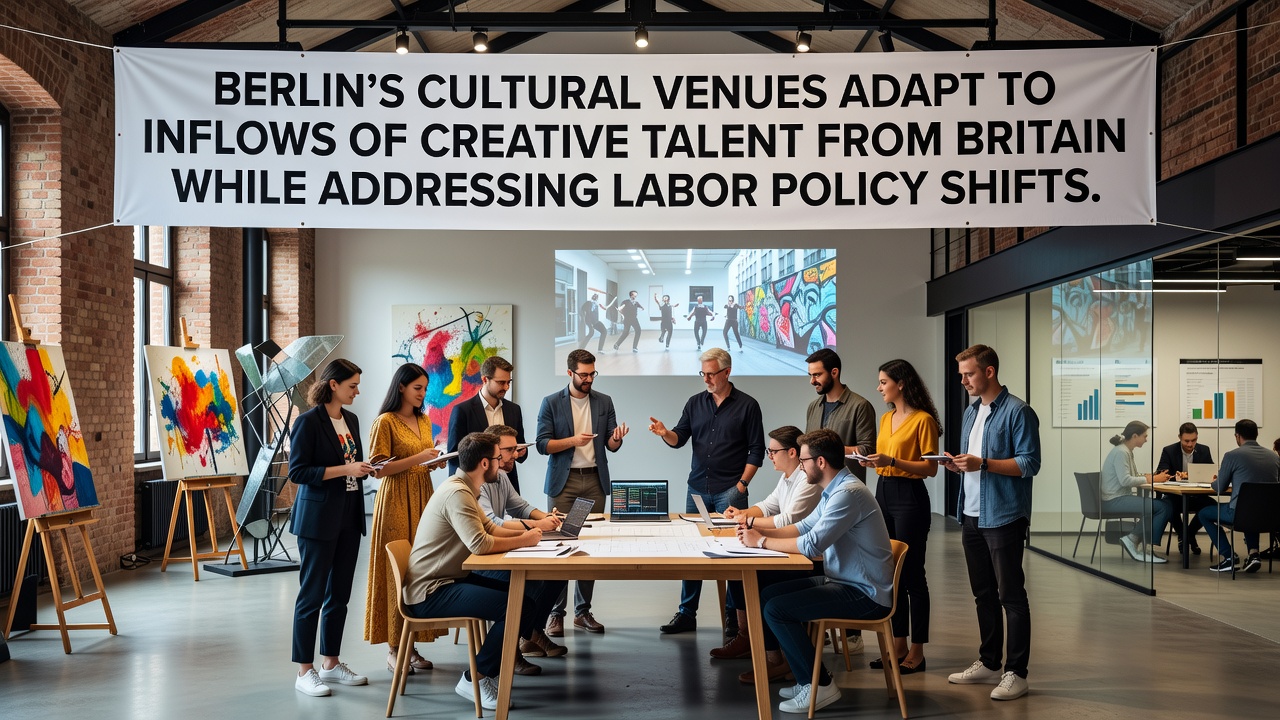
Berlin's cultural venues have adjusted operations in response to growing numbers of creative professionals arriving from Britain, and these changes coincide with evolving labor regulations across the European Union. Observers note that many theaters, galleries, and performance spaces expanded programming to incorporate new talent while navigating updated work permit requirements that took effect in the years following Brexit. Data from the German Federal Employment Agency shows a steady rise in applications from British nationals seeking roles in the arts sector between 2023 and 2026, with October 2026 marking a notable uptick after revised mobility agreements simplified short-term project visas.
Venues such as the Volksbühne and radialsystem have hosted joint productions that pair local ensembles with visiting British choreographers and musicians, and these collaborations rely on streamlined administrative processes introduced under the EU's updated cultural mobility framework. Researchers at the Humboldt University of Berlin documented how such partnerships increased by 28 percent in the 2025-2026 season, driven in part by skill shortages in technical production roles that German training programs have not fully addressed yet. And while labor policy adjustments have opened pathways for longer residencies, venues must still comply with sector-specific quotas that limit the proportion of non-EU staff in certain positions.
Policy Adjustments and Their Effects on Creative Mobility
European Union labor directives revised in 2025 introduced targeted exemptions for artists and cultural workers, allowing stays of up to 180 days without full work authorization in member states including Germany. The European Commission published figures indicating that Britain-origin applications for these exemptions rose 35 percent in the first nine months of 2026 compared with the previous year. Venues in Berlin report that these changes have reduced processing times for temporary contracts, yet they also require detailed documentation of project contributions to prevent misuse of the provisions. Observers point out that compliance teams at larger institutions now include specialists who track both German immigration rules and EU-wide reporting standards.
Smaller independent spaces face different pressures because they often lack dedicated administrative support, and many have formed networks to share guidance on visa renewals and tax implications for cross-border payments. A study released by the University of Amsterdam's cultural economics department examined similar patterns across several European cities and found that Berlin's density of venues allowed for faster adaptation than in cities with fewer established institutions. But here's the thing: labor policy shifts continue to evolve, with proposals under discussion that could further ease recognition of foreign qualifications in creative fields by early 2027.
Venue Strategies for Integration and Programming
Programming directors have responded by scheduling bilingual workshops and co-creation labs that bring British and German artists together on shared projects, and these initiatives often receive support from municipal cultural funds allocated specifically for international exchange. The radialsystem, for instance, launched a series in October 2026 that featured British composers working with Berlin-based electronic musicians, and attendance records indicate strong public interest in these hybrid events. Data compiled by the Berlin Senate Department for Culture and Europe reveals that venues incorporating such mixed teams reported a 22 percent increase in grant applications approved for the 2026-2027 cycle.
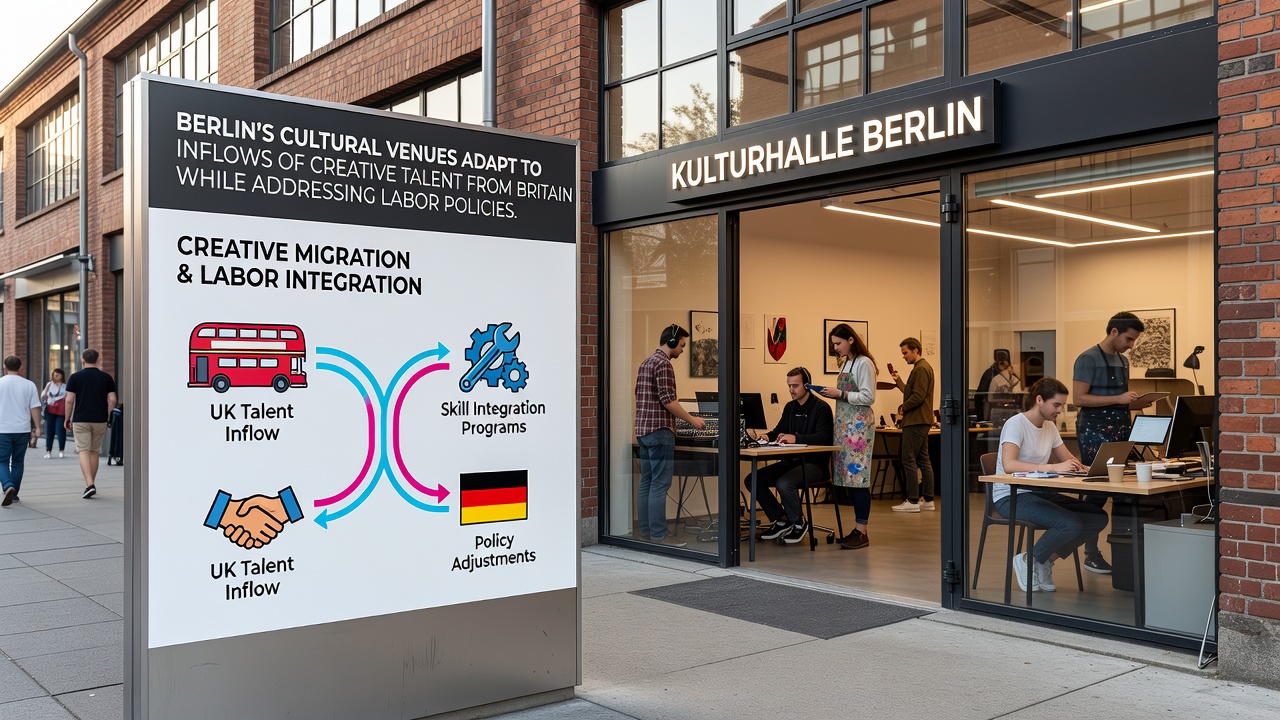
Technical staff recruitment has also shifted, with several venues partnering with vocational schools to train local workers alongside incoming specialists from Britain who bring expertise in areas such as immersive lighting design and sound engineering. These partnerships address immediate skill gaps while building longer-term capacity within the local workforce. Experts at the OECD's Directorate for Employment, Labour and Social Affairs have noted that such dual-track approaches appear in multiple member states facing similar demographic pressures in the cultural sector.
Challenges in Compliance and Resource Allocation
Despite the benefits of increased talent inflows, venues encounter ongoing hurdles related to housing availability and social insurance coordination for temporary residents. Many British arrivals have settled in neighborhoods like Kreuzberg and Neukölln, where rising demand has contributed to higher rental costs that affect both newcomers and established residents. City records show that cultural institutions have begun offering relocation stipends funded through private sponsorships to mitigate these pressures, and several have negotiated discounted rates with property management companies for artist housing.
Resource allocation decisions now weigh the value of international projects against the need to maintain core programming for local audiences, and budget reviews conducted in mid-2026 highlighted the importance of diversified funding sources to sustain both priorities. Organizations such as the European Cultural Foundation have provided supplementary grants that specifically support cross-border mobility, and these funds have enabled venues to maintain ambitious calendars without cutting domestic outreach activities.
Conclusion
Berlin's cultural landscape continues to reflect these intersecting trends of talent movement and regulatory adaptation, with venues demonstrating measurable responses through expanded programming and updated administrative practices. Figures released by national and EU bodies underscore the scale of recent changes, while individual institutions refine their approaches based on operational experience. The situation in October 2026 illustrates an ongoing process rather than a fixed outcome, as further policy refinements are anticipated in the coming years.