Logan Schwarz · 1 October 2026
Local Resistance to Renewable Energy Installations Intersects with Labor Mobility Adjustments in Industrial Heartlands
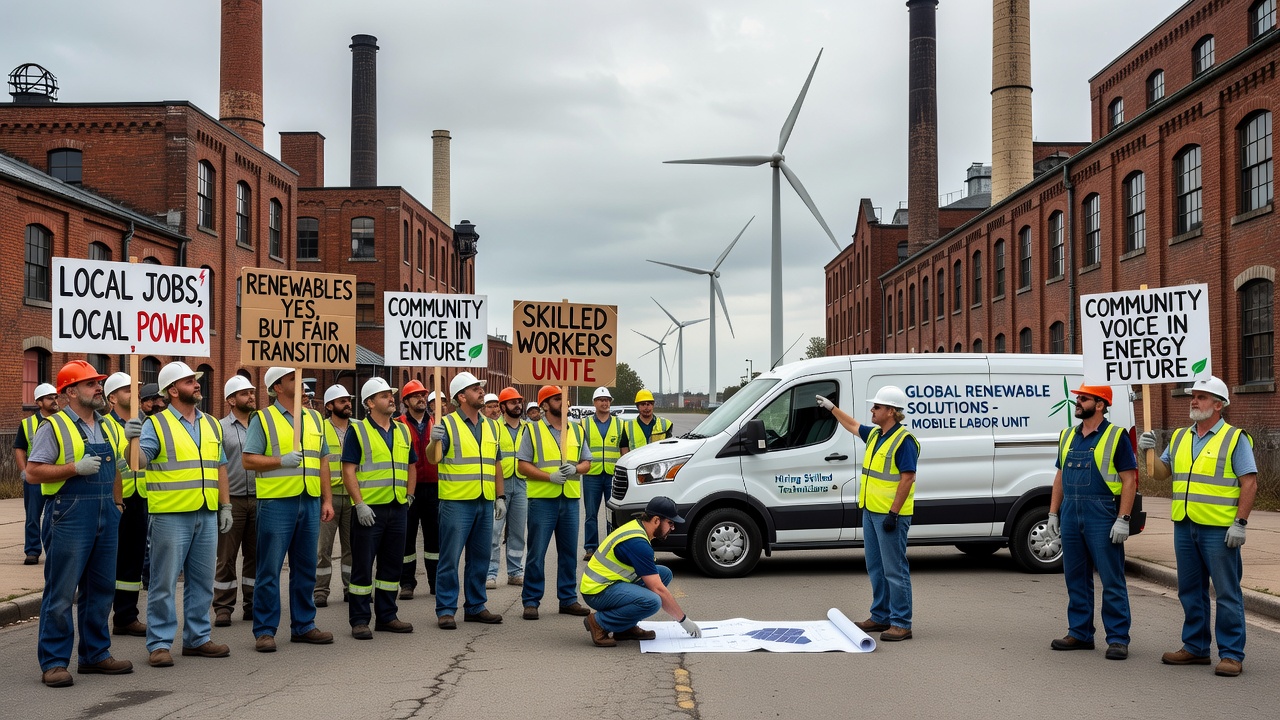
Industrial regions across North America and Europe have seen renewable energy projects expand rapidly since 2023, yet communities in former coal and manufacturing zones continue to voice concerns over land use, visual impacts, and changes to local economies. These tensions coincide with shifts in labor mobility as workers move between declining heavy industries and emerging clean energy sectors, creating overlapping challenges for regional planners.
Data from government agencies show that opposition to solar farms and wind installations has delayed or altered multiple projects in areas like the U.S. Midwest and parts of Germany's Ruhr valley. At the same time, skill shortages in installation and maintenance roles have prompted programs to relocate workers from legacy sectors, with some regions reporting net out-migration of younger employees seeking opportunities elsewhere.
Patterns of Resistance in Former Industrial Zones
Observers note that resistance often centers on agricultural land conversion and grid infrastructure requirements. In October 2026, the European Environment Agency released figures indicating that over 120 renewable proposals in industrial heartland counties faced local challenges, with 35 percent involving formal appeals or public consultations that extended timelines by six months or more. Communities cite preservation of rural character and impacts on property values as recurring points of contention, while project developers highlight revised siting guidelines aimed at reducing conflicts.
One study conducted across three U.S. states found that solar installations near historic manufacturing towns encountered higher rates of organized pushback when proposals overlapped with active farming operations. Local governments responded by updating zoning ordinances to require larger setbacks and community benefit agreements, measures that have become standard in several Midwestern counties since early 2025.
Labor Mobility Adjustments and Skill Transfers
Adjustments in labor mobility have accelerated as emission-intensive industries scale back operations. Government statistics reveal that regions with concentrated steel and automotive production experienced a 12 percent increase in cross-regional worker movements between 2024 and 2026, driven by retraining initiatives tied to renewable supply chains. Programs funded through national infrastructure packages have supported transitions for former miners and factory employees into roles involving turbine assembly and solar panel maintenance.
Yet mobility remains uneven. Data indicates that older workers show lower relocation rates compared with those under 40, leading some industrial heartlands to face temporary shortages in specialized trades while neighboring areas absorb surplus labor. Partnerships between vocational schools and energy firms have expanded apprenticeship pathways, though uptake varies by location and access to training facilities.
Where Resistance and Labor Shifts Overlap
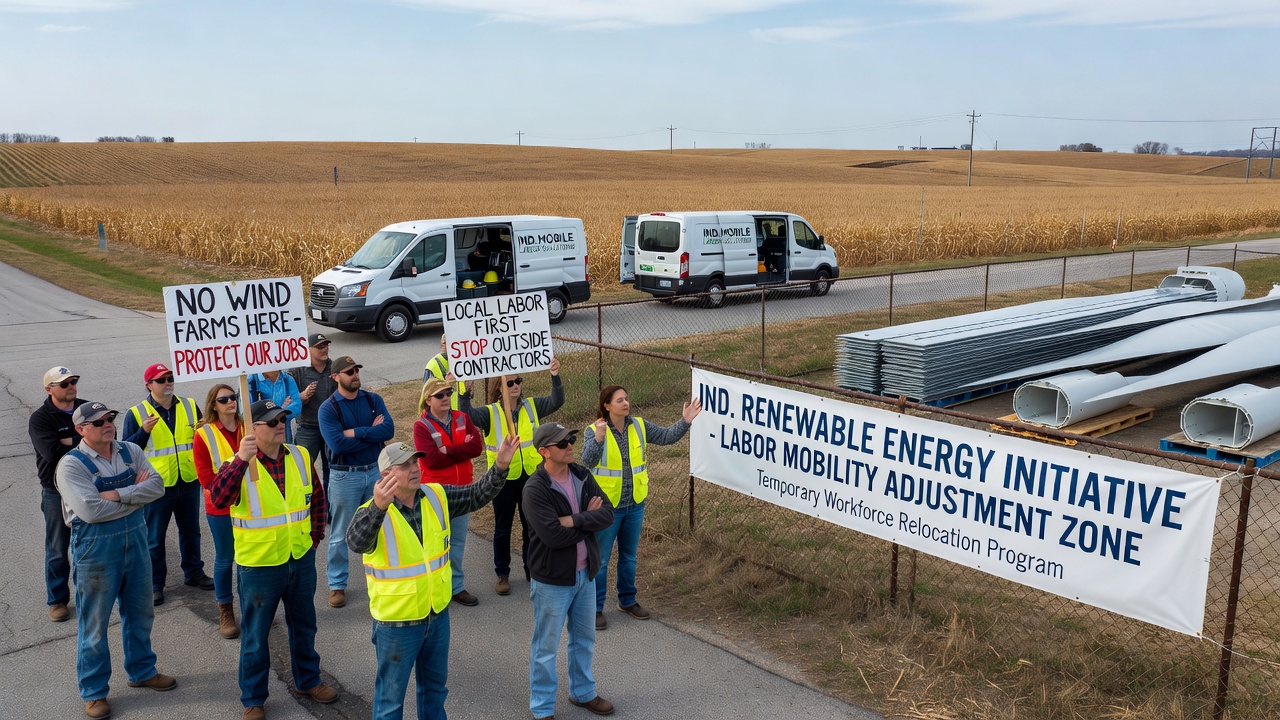
The intersection appears most clearly in counties where project delays coincide with workforce retraining timelines. According to a U.S. Department of Energy analysis, communities that successfully negotiated modifications to renewable layouts often retained more local employment through requirements for hiring from within the region rather than relying on external contractors. This approach has reduced some friction, although it extends project costs and schedules.
In parallel, European Commission reports document similar dynamics in eastern German and Polish industrial districts, where labor mobility schemes linked to wind expansion encountered pushback over perceived outside influence on local job markets. Officials adjusted incentive structures in 2025 to prioritize in-region training, resulting in modest increases in participation rates by late 2026. What's interesting is how these adjustments sometimes eased resistance when residents saw direct connections between new installations and retained or redirected employment.
Case examples include a solar array in a former auto-parts hub that incorporated community input on layout and secured commitments for 60 percent local hires after initial protests. Elsewhere, wind projects in coal-adjacent areas incorporated visual mitigation features following public feedback, which in turn supported smoother permitting while labor programs focused on upskilling existing residents rather than importing talent.
Policy Responses and Ongoing Developments
Regional authorities have introduced hybrid frameworks that address both land-use concerns and workforce transitions. These include expanded public comment periods for energy projects alongside targeted mobility grants that cover relocation or commuting costs for displaced workers. Figures released in October 2026 by national statistical offices show modest upticks in approval rates for revised renewable proposals in heartland zones compared with earlier years, suggesting that integrated approaches may be influencing outcomes.
Industry organizations and academic researchers continue to track these intersections, with studies examining how labor flow patterns affect project economics and community acceptance over multi-year periods. The patterns emerging from these analyses point to the value of coordinated planning that treats energy siting and workforce mobility as linked rather than separate issues.
Conclusion
Developments through October 2026 demonstrate that local resistance to renewable installations in industrial heartlands often intersects with labor mobility adjustments in measurable ways. Government data and project records show that addressing both dimensions through revised siting practices and region-focused training programs can influence timelines and employment retention. Continued monitoring by agencies and research institutions will clarify how these dynamics evolve as renewable capacity grows in legacy industrial areas.