
Devon Schulz · 3 September 2026
Regional Demographic Pressures Reshape South American Trade Negotiations and Cultural Investment Flows
Population changes across South America continue to influence how governments approach trade agreements and direct resources toward cultural projects, with data from multiple agencies showing shifts in workforce size, migration patterns, and age distributions that affect negotiation priorities.
Current Demographic Trends in the Region
Countries such as Brazil, Argentina, and Colombia report declining fertility rates alongside steady urbanization, according to figures released by the Economic Commission for Latin America and the Caribbean, while aging populations in Chile and Uruguay create new demands for labor mobility clauses in bilateral deals. These patterns have prompted negotiators to include provisions for skilled worker exchanges and education mobility programs rather than focusing solely on tariff reductions.
Researchers at regional universities note that youth bulges in Peru and Bolivia coincide with rising interest in digital content production, which in turn attracts investment from European and Asian partners seeking co-production agreements in film, music, and heritage preservation initiatives. Migration from rural to coastal areas has also altered port usage statistics, leading trade officials to prioritize infrastructure upgrades that support both commercial shipping and cultural tourism routes.
Adjustments in Trade Negotiation Strategies
Officials involved in Mercosur talks have incorporated demographic projections into their positions on services trade, particularly in education and entertainment sectors, because workforce shortages in certain technical fields require cross-border training frameworks. Data compiled through 2025 indicates that Argentina and Brazil have sought longer transition periods for cultural goods liberalization to protect local industries facing competition from larger export markets.
Negotiators from the Pacific Alliance countries have referenced similar statistics when discussing investment chapters, emphasizing protections for intellectual property in creative industries while allowing greater flexibility for joint ventures that transfer technology to younger demographic groups. These adjustments reflect calculations based on census updates rather than traditional commodity price volatility alone.
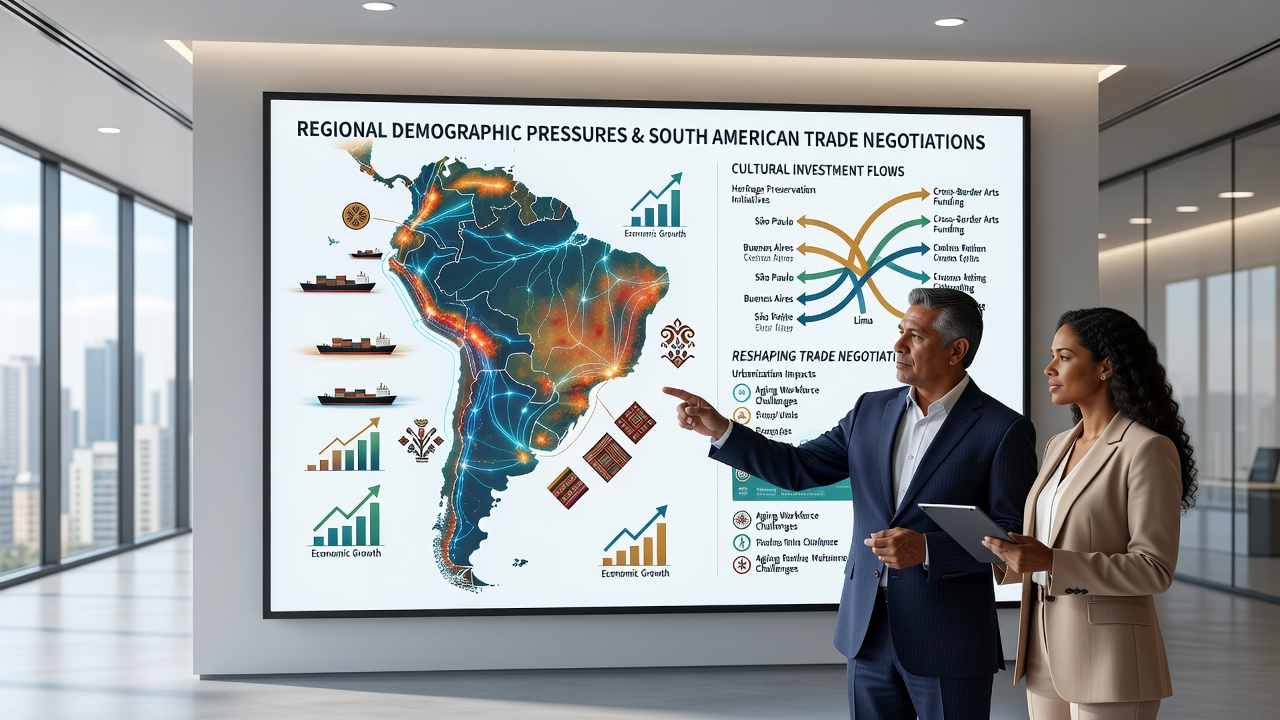
Shifts in Cultural Investment Patterns
Capital flows into museums, festivals, and media platforms have followed demographic concentrations, with funding agencies in Santiago and Bogotá directing resources toward projects that engage growing middle-aged urban populations interested in contemporary arts programming. Reports from the Inter-American Development Bank highlight increased allocations for digital archives and language preservation efforts in indigenous communities experiencing out-migration.
Private sector participants have adjusted their portfolios accordingly, channeling resources into streaming partnerships and heritage site restorations that align with tourism data showing higher visitorship from domestic travelers in the 25-to-40 age range. Governments in Ecuador and Paraguay have introduced tax incentives tied to employment targets that match local age and skill profiles, encouraging foreign partners to establish training centers alongside production facilities.
Developments Around September 2026
Scheduled regional summits in September 2026 are expected to feature updated demographic modeling from national statistical offices, which will inform revised annexes on labor and cultural cooperation in ongoing agreements with the European Union and several Asian economies. Preliminary briefings circulated among trade ministries indicate that these sessions will address how projected population changes through 2035 affect commitments on content quotas and artist exchange programs.
Analysts tracking investment announcements note that several cultural infrastructure bids already reference these forthcoming models, suggesting that contract terms will include performance metrics linked to workforce development in regions with rapid urbanization.
Conclusion
Demographic data continues to serve as a reference point for South American policymakers when structuring trade frameworks and allocating funds for cultural initiatives, with measurable effects on negotiation outcomes and project selection processes documented through 2026. Ongoing census work and economic reporting from established regional bodies provide the foundation for these adjustments across multiple countries.